February 2026 Newsletter: How Rail Safety Regulations Are Created and Enforced
Federal rail safety regulations do not come out of thin air. They are the result of a defined process that begins with lawmaking and ends with enforcement in the field.
Congress passes laws that give federal agencies authority to regulate safety. The Federal Railroad Administration (FRA) uses that authority to develop specific regulations that govern inspections, testing, maintenance, and documentation. These are the rules Signalmen work under every day.
Before a regulation becomes final, the FRA is required to go through a rulemaking process. That process typically includes a proposed rule, a public comment period, and a final rule. During public comment, labor organizations, railroads, safety advocates, and individual workers can submit feedback based on real-world experience.
This step matters. If the only voices heard are carriers and industry groups, regulations will focus on cost and operating ratios rather than safety. Worker input helps ensure that rules address actual conditions in the field, not assumptions made from an office.
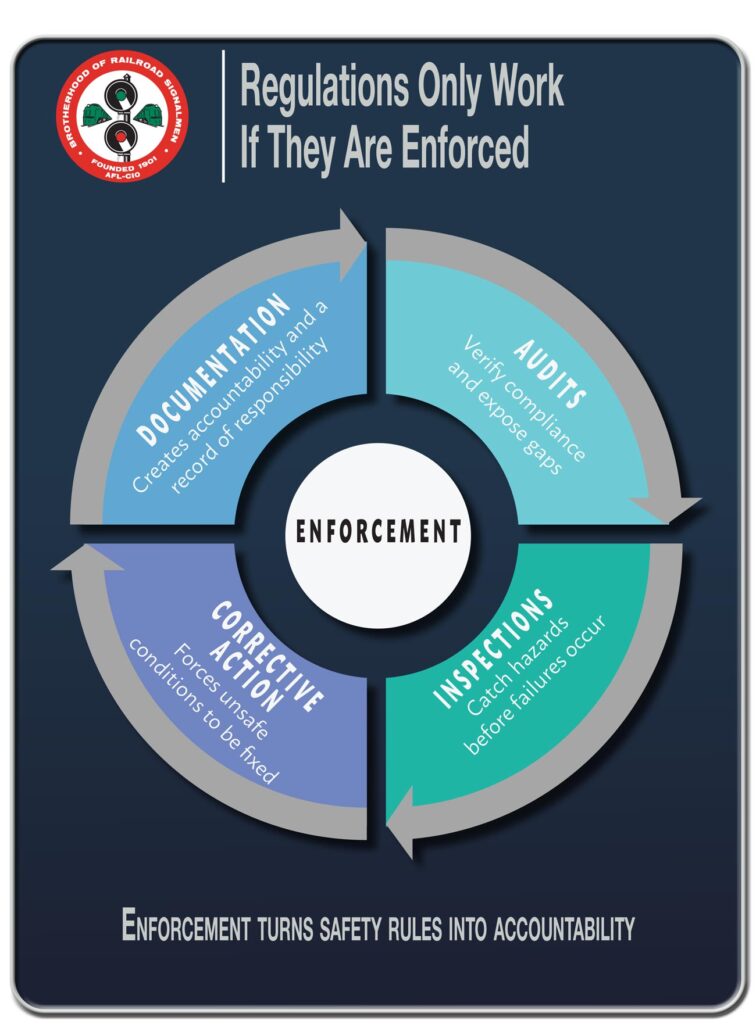
Once a regulation is finalized, enforcement is what gives it meaning. FRA audits, inspections, documentation requirements, and penalties are what prevent safety rules from becoming optional.
Enforcement creates accountability and ensures carriers cannot quietly redefine what “safe” means. The Brotherhood of Railroad Signalmen (BRS) plays an active role throughout this process. By participating in public comment, providing testimony, and submitting field-based documentation, the BRS helps defend existing protections and push back against efforts to weaken them.
Understanding how regulations are created and enforced strengthens our ability to protect our craft, support safety across all railroad operations, and hold carriers accountable to enforceable standards.
THE REGULATORY PROCESS: How Laws Become Enforceable Safety Rules